Quick Information Box
| Project Parameter | Opportunity Specifics |
|---|---|
| Programme Name | Brewery & Quality In-Service Training Programme (2026 Intake) |
| Employer | South African Breweries (SAB) |
| Location | Nationwide (Alrode, Chamdor, Newlands, Rosslyn, Ibhayi, Prospecton, Polokwane) |
| Duration | Dictated by institutional P1/P2 structural requirements |
| Monthly Stipend/Salary | Market-related learning allowance paid monthly (Disclosed to shortlisted candidates) |
| Closing Date | 20 July 2026 |
| Reference Number | SAB-INSV-2026 (Specify branch and track in your application) |
| Application Method | Digital submission via the official SAB Careers Portal or designated regional submission channels |
Introduction
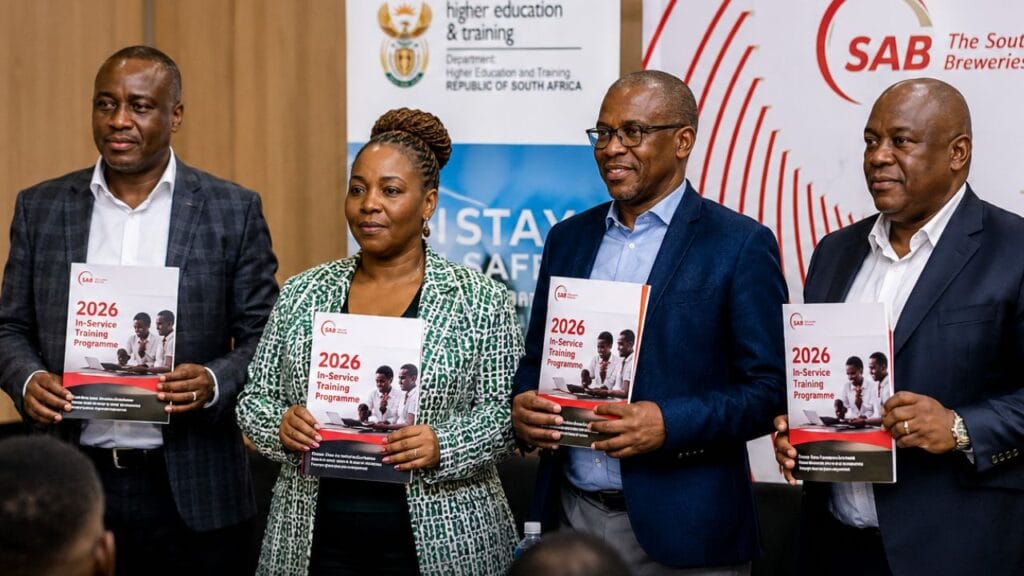
Securing accredited, high-quality experiential learning remains one of the most significant structural hurdles faced by technical and scientific students in South Africa. Without structural workplace exposure—commonly referred to as P1 and P2 components—tertiary students pursuing technical qualifications cannot secure their final diplomas. In response to this critical development need, South African Breweries (SAB) has officially launched its SAB In-Service Training Programme for the 2026 academic intake, offering an unmatched entry point into the fast-moving consumer goods (FMCG) manufacturing ecosystem.
Thank you for reading this post, don't forget to subscribe!This comprehensive industry training framework targets third-year National Diploma students registered at recognized South African TVET colleges and universities. Spread across seven strategic manufacturing hubs throughout South Africa, the initiative is divided into two operational streams: core Brewery Operations and rigorous Quality Assurance laboratories. With a final closing date set for 20 July 2026, this nationwide intake provides foundational career development, professional mentorship, and financial support through a competitive monthly stipend. For students looking to bridge the gap between heavy academic theory and fast-paced industrial reality, executing a successful application to this world-class manufacturer could define their early professional trajectory.
SAB In-Service Training Programme Overview
The primary purpose of the SAB In-Service Training system is to cultivate a robust pipeline of highly competent, industry-ready technical professionals who can support South Africa’s broader industrial economy. By embedding ungraduated students directly into high-volume, automated production lines and advanced microbiological laboratories, SAB provides structural experiential learning that satisfies institutional academic requirements.
As a subsidiary of Anheuser-Busch InBev (AB InBev), the largest brewing company globally, SAB operates production facilities characterized by high technological sophistication. For an ungraduated student, entering this ecosystem means shifting from simulated campus workshops to processing plants running complex automation, thermal dynamics, and strict microbiological controls. The program is specifically built for young South Africans who possess high baseline academic performance but lack the commercial workplace history required to break into the formal employment sector. Rather than performing basic administrative tasks, selected candidates are treated as active junior operators and laboratory technicians, receiving clear responsibilities, measurable performance goals, and direct oversight from senior process engineers and laboratory masters.
SAB In-Service Training Available Opportunities
For the 2026 intake, SAB has allocated a total of 53 structured training seats across its national production footprint. These roles are split between two distinct professional pathways depending on the student’s field of study:
1. Brewery In-Service Training Stream (39 Vacancies)
This track focuses heavily on heavy plant mechanics, chemical processing, automated fluid dynamics, and large-scale packaging systems. The 39 available training positions are distributed across the following regional facilities:
- Chamdor Brewery (Gauteng): 6 Posts
- Rosslyn Brewery (Gauteng): 6 Posts
- Newlands Brewery (Western Cape): 3 Posts
- Ibhayi Brewery (Eastern Cape): 3 Posts
- Prospecton Brewery (KwaZulu-Natal): 3 Posts
- Alrode Brewery (Gauteng): 3 Posts
- Polokwane Brewery (Limpopo): 1 Post
2. Quality In-Service Training Stream (14 Vacancies)
This specialized stream is housed within SAB’s state-of-the-art analytical and central laboratories, focusing on analytical chemistry, purity tracking, biotechnology, and food safety standards. The 14 allocations are distributed as follows:
- Ibhayi Brewery (Eastern Cape): 3 Posts
- Prospecton Brewery (KwaZulu-Natal): 3 Posts
- Rosslyn Brewery (Gauteng): 3 Posts
- Newlands Brewery (Western Cape): 2 Posts
- Polokwane Brewery (Limpopo): 2 Posts
- Alrode Brewery (Gauteng): 1 Post
SAB In-Service Training Minimum Requirements
SAB maintains a strict screening protocol to ensure selected candidates can handle the rigorous technical workloads of an active production environment. Applicants must satisfy all the baseline criteria outlined below to bypass initial automated application screenings.
Educational Requirements
Applicants must be current registered students at an accredited South African university or Technical and Vocational Education and Training (TVET) college. Crucially, they must be in their third year of theoretical study toward a National Diploma and possess an official academic record confirming they require practical, plant-based workplace experience (P1/P2 components) to formalize their graduation.
The acceptable fields of tertiary specialization are strictly limited to:
- For Brewery Operations: Mechanical Engineering, Chemical Engineering, Chemical Technology, or Food Technology.
- For Quality Laboratories: Biotechnology, Microbiology, or Food Sciences.
Age Requirements
The recruitment documentation indicates that no arbitrary upper age restrictions are enforced for these developmental training seats. SAB reviews all applicants based on their academic eligibility, institutional alignment, and natural career potential. However, in alignment with national youth development directives, South African citizens between the ages of 18 and 35 are highly encouraged to step forward.
Additional Requirements
- Citizenship & Status: Applicants must be legal South African citizens holding a valid, barcoded green identity document or smart ID card. They must be currently unemployed and free from binding contractual obligations to other corporate entities.
- Workplace Readiness: Candidates must exhibit functional computer literacy (the ability to interact smoothly with Microsoft Office interfaces, automated data logs, and basic digital communication tools).
- Physical & Environmental Fit: Candidates must be fully comfortable working within high-volume manufacturing plants that feature continuous noise, heavy machinery rotations, chemical environments, and structured shift systems.
- Experience Level: This is an entry-level development pathway. No prior professional experience is required.
SAB In-Service Training Monthly Stipend and Benefits
SAB protects its student cohorts by providing a structured package designed to eliminate financial barriers during their learning terms.
Monthly Learning Allowance
Every selected candidate receives a competitive monthly learning stipend. While the exact baseline figures are kept confidential and scale according to specific engineering vs. scientific streams, the allowance is specifically calculated to comfortably cover regional transport, basic housing support, and daily nutritional needs near the assigned brewery.
Hands-on Industrial Experience
The core benefit of the program lies in its direct practical transfer. Students shift away from abstract textbook drawings to gain real-world competencies:
- Brewery Stream Competencies: Learning to operate advanced automated brew centers, manipulating cellars, handling heavy systemic filters, managing Bright Beer Tanks (BBTs), conducting equipment lubrication schedules, and executing preventative asset maintenance.
- Quality Stream Competencies: Executing real-time product testing, running sterile microbiological assays, validating packaging seals, handling sophisticated laboratory instrumentation, and logging non-conformance metrics across the complete product value chain.
Professional Skills Development
Beyond technical machinery control, SAB embeds its trainees into modern corporate structures. Participants exit the program with verified competencies in:
- Structured industrial problem-solving models (such as Five-Why Root Cause Analysis and systematic Quick-Fix Routines).
- Formal shift handovers, operational reporting, and inter-departmental maintenance ticketing.
- Occupational health and safety compliance rules within heavy industrial environments.
Why This SAB In-Service Training Opportunity Matters for South African Youth
The current youth unemployment reality in South Africa requires immediate, aggressive intervention. Many young graduates find themselves trapped in a difficult cycle: they cannot find a job without practical experience, but they cannot get that practical experience without a job. The SAB In-Service Training model actively breaks this cycle by transforming ungraduated students into competent, operational professionals before they even step onto the graduation stage.
By training within a global manufacturer like SAB, young South Africans earn a powerful institutional endorsement on their resumes. Gaining professional experience at a firm known for its world-class manufacturing standards changes a candidate’s profile from an unproven student to an asset ready for the local industrial market. Furthermore, this initiative supports national transformation goals by equipping youth from diverse regions with specialized technical skills, ensuring that South Africa retains a competitive, locally grown base of engineering and scientific talent.
SAB In-Service Training Application Process
Because these opportunities attract high volumes of applications from across South Africa, candidates must follow the formal application process precisely.
Documents Required
To avoid immediate disqualification at the initial sorting phase, you must compile and scan the following documents into clear, legible, low-resolution PDF formats:
- An updated, comprehensive Curriculum Vitae (CV) outlining your current contact details, exact residential location, and academic timeline.
- A certified copy of your South African National Identity Document (Certification must be clear and completed within the last three months).
- Your complete, official academic transcript displaying all completed semesters and continuous evaluation credits.
- An official institutional letter stamped by your TVET college or university work-integrated learning (WIL) office, explicitly stating that you have completed your theoretical requirements and urgently require an in-service training placement to graduate.
Important Dates
- Applications Open: Currently active across all regional portals.
- Final Closing Date: 20 July 2026.
- Strategic Note: Portals will close automatically at midnight on the deadline date. Late entries, incomplete files, or offline hand-ins after this cutoff will not be reviewed under any circumstances.
Step-by-Step Application Guide
1
Document Consolidation
Pre-application Phase
1.Document Consolidation:Pre-application Phase.
Gather your CV, certified ID copy, complete academic transcripts, and your official university experiential training requirement letter. Merge these files into structured, clearly labeled PDF attachments.
2
Portal Access and Selection
Digital Portal Navigation
2.Portal Access and Selection:Digital Portal Navigation.
Navigate to the official SAB Careers platform. Locate the “In-Service Training 2026” job posting matching your chosen stream—either Brewery Operations or Quality Laboratory.
3
Profile Creation and Data Input
Registration Phase
3.Profile Creation and Data Input:Registration Phase.
Create a secure user profile on the portal. Fill out every data field accurately, ensuring your email address, phone number, and targeted regional brewery location are perfectly entered.
4
Document Upload and Submission
Final Verification
4.Document Upload and Submission:Final Verification.
Upload your prepared PDF files into their matching slots on the portal. Double-check that your transcripts and institution letters are fully legible before clicking the final submit button. Monitor your inbox for an automated confirmation receipt.
Application Tips: SAB In-Service Training
- Apply to Local Hubs: Apply for the specific brewery location closest to your current residence or institutional base. SAB looks highly upon localized candidates who do not require complex relocation adjustments.
- Refine Your CV: Ensure your CV clearly highlights your field of study, your familiarity with basic engineering or laboratory concepts, and any practical workshop assignments you completed on campus.
- Secure Your Institutional Letter Early: Do not wait until the final week of July to request your WIL letter from your campus administration. Secure this document immediately to prevent unexpected delays.
Common Mistakes Applicants Should Avoid
- Submitting Incomplete Documentation: Uploading your academic transcript while missing the official institutional WIL requirement letter is the quickest route to automated system rejection.
- Targeting the Wrong Stream: Applying for a Quality Laboratory seat with a Mechanical Engineering qualification, or applying for a Brewery Operations seat with a Microbiology background, shows poor attention to detail. Match your discipline precisely to the requirements.
- Waiting for the Final Deadline: High internet traffic on 20 July 2026 can cause platform slowdowns or upload timeouts. Submit your application early to secure your spot safely.
- Providing Dead Contact Information: Ensure the phone numbers and email addresses on your profile are fully active. If recruitment teams cannot reach you within two consecutive attempts, they will immediately move on to the next candidate.
Final Thoughts
The SAB In-Service Training Programme for 2026 is an exceptional opportunity for ambitious TVET and university students to launch their technical careers. By combining structured practical learning, direct exposure to advanced machinery, and solid financial support, SAB actively helps students transform their theoretical knowledge into a sustainable long-term career. Take ownership of your professional development by gathering your documents, refining your CV, and submitting your application well ahead of the July 2026 closing deadline.
FAQ: Frequently Asked Questions
1. Who is eligible to apply for the SAB In-Service Training Programme?
Students currently in their third year of a National Diploma at an accredited South African university or TVET college who require mandatory practical workplace experience (P1/P2) to graduate are fully eligible to apply.
2. What specific academic qualifications are required for the Brewery stream?
The Brewery Operations stream requires students to be pursuing a National Diploma in Mechanical Engineering, Chemical Engineering, Chemical Technology, or Food Technology.
3. What academic qualifications are needed for the Quality stream?
The Quality Assurance Laboratory stream requires students to be studying toward a National Diploma specializing in Biotechnology, Microbiology, or Food Sciences.
4. What is the official age requirement for this SAB In-Service Training intake?
There are no rigid upper age limits for this intake. Any student who meets the educational criteria and requires institutional P1/P2 experiential learning is welcome to apply, though youth applicants are highly prioritized.
5. Is previous professional work experience required to secure a placement?
No. This is a foundational, entry-level experiential learning track created specifically for students who lack prior formal employment history in the manufacturing sector.
6. Is the SAB In-Service Training programme a paid opportunity?
Yes. Every successful applicant who joins the 2026 cohort will receive a competitive monthly learning stipend to assist with local transport, accommodation, and daily living costs.
7. Where exactly will successful training candidates be working?
Selected students will be placed within one of seven major SAB manufacturing hubs across South Africa, including the Chamdor, Rosslyn, Alrode, Newlands, Ibhayi, Prospecton, or Polokwane breweries.
8. When is the final closing date for the 2026 intake applications?
The application window officially closes on 20 July 2026. The online system will automatically stop accepting submissions at midnight on this date.
9. What critical documents must I attach to my digital profile?
You must upload a comprehensive CV, a certified copy of your South African ID, your complete academic transcript, and an official stamped letter from your tertiary institution proving you need practical training to graduate.
10. How are shortlisted candidates contacted by SAB?
Shortlisted applicants are typically contacted directly by the SAB Human Resources team via phone calls or formal emails to schedule technical interviews and basic entry assessments.
Disclaimer: While every effort has been made to ensure the accuracy of this information, applicants are encouraged to verify all details directly with the official recruiting institution or employer before submitting an application. We are not affiliated with the recruiting organization and do not process applications on its behalf.

Amina Sechaba is a passionate career writer and employment researcher dedicated to helping South Africans find better job opportunities and prepare for successful careers. With years of experience in content writing and career development, Amina creates informative articles, application guides, and interview tips that empower job seekers to reach their full potential. Through her work with Submit Your CV, she aims to simplify the job application process and provide reliable information on learnerships, internships, and career advice for both students and professionals.